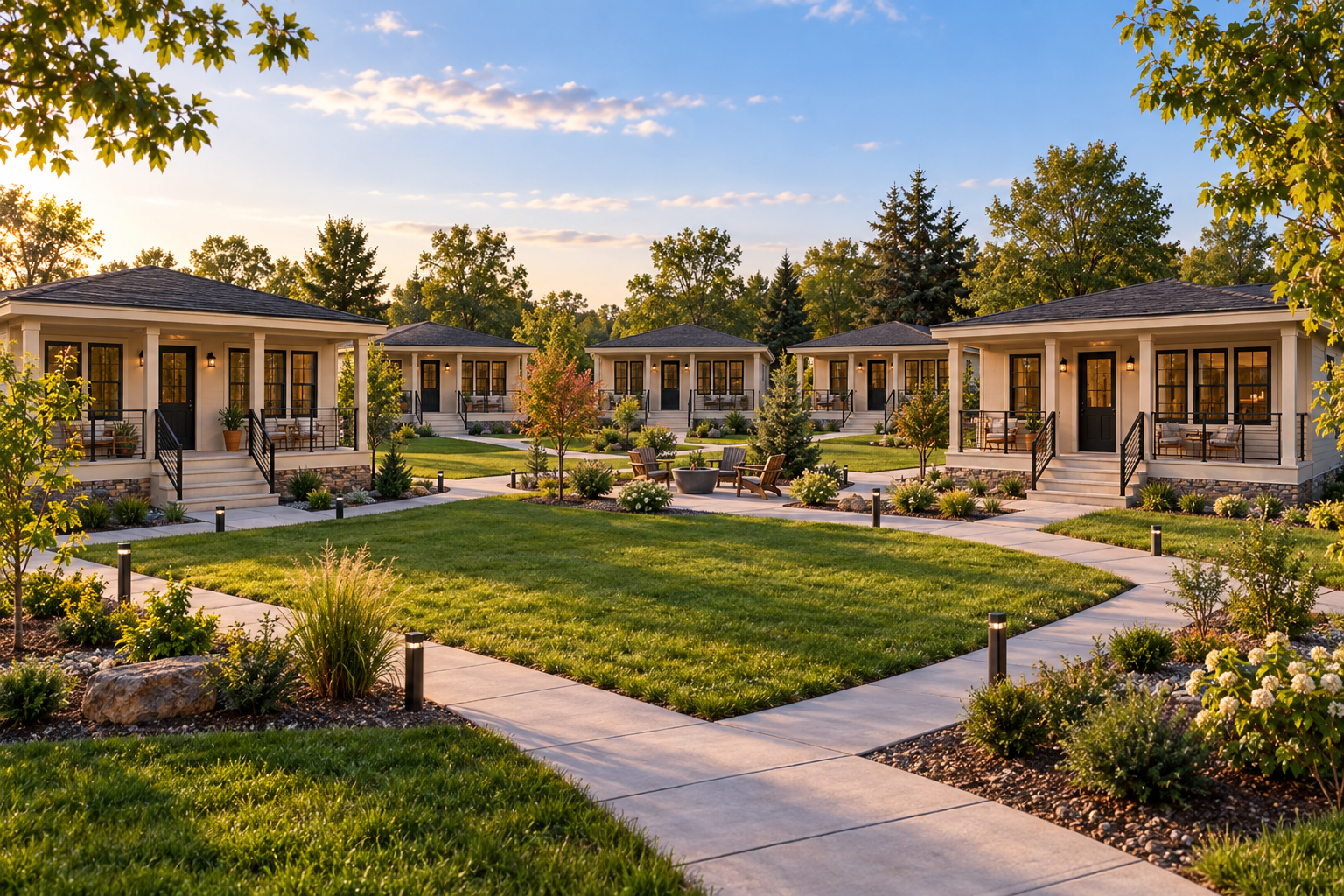
Explore options for your modular home, backyard suite or community project. What’s available depends on your property, location, intended use and personal circumstances.
We can help you explore financing
Cheroke can connect you with lending contacts who work with banks such as RBC and Scotiabank, as well as mortgage brokers and other lenders. Whether you’re buying a modular home, adding a backyard suite or planning a rental project, we can help you find a starting point for your financing enquiry.
Tell us about your property and what you’d like to build through our contact form. We’ll share relevant lending contacts so you can discuss available options, qualification and your project’s payment schedule.
Financing is arranged through the lender and is subject to credit, property and project approval. Available products vary by lender.
Buying your home
Factory-built homes have their own payment schedule. Discuss financing early so your lender’s advances align with production, delivery and site preparation.
Modular home financing — CMHC Prefab Plus
Eligible buyers may access financing through a participating lender. Down payment, appraisal, foundation and year-round occupancy requirements apply. Published advances include land/site preparation, the unit upon delivery and subsequent finishing work. Confirm how factory deposits will be covered before committing.
Eligible first-time buyers or buyers of a newly built home may qualify for up to 30-year insured amortization. Income, credit, property value and lender approval still apply. A longer term may lower scheduled payments while increasing total interest.
Qualifying buyers and owners building on their own land may recover some eligible tax. The correct application route matters for modular homes; the factory invoice alone may not establish the calculation. Primary-residence, valuation and filing conditions apply.
Federal and Ontario first-time buyer rebates may provide relief on eligible new homes. Ownership history, citizenship or residency, occupancy, home value and agreement/construction dates affect eligibility. Mortgage-program eligibility does not automatically establish tax-rebate eligibility.
Eligible new-home projects may qualify for enhanced provincial relief and an Ontario New Home Affordability Payment. Amounts depend on eligible tax, home value and other rebates. Key qualifying windows run April 1, 2026–March 31, 2027, but agreement and construction-start rules differ by transaction type. Check the official dates before relying on this relief.
A qualifying new energy-efficient home with CMHC-insured financing may qualify for a 25% refund of the mortgage-insurance premium. This is a premium refund, not a discount on the home price. Energy-performance evidence is required; CSA A277 certification alone does not establish eligibility.
Your home’s intended use matters. Owner-occupied homes, rental units and qualifying first-time purchases follow different rules.
First-time home buyers
Eligible first-time buyers may receive up to $50,000 of federal tax relief and up to $80,000 of Ontario provincial relief. Actual amounts depend on tax paid, home value and qualifying dates. These are tax rebates, not a fixed cash grant.
Temporary enhanced relief also covers certain buyers who are not first-time buyers. Provincial relief and an Ontario affordability payment can total up to $130,000 in qualifying cases, subject to tax, value and timing rules. This total overlaps with other rebates; it is not an extra amount to add to them.
For ordinary new-housing rebates, federal relief can reach $6,300 and Ontario relief can reach $24,000 in common qualifying cases. Owner-built homes where HST was not paid on the land have a different Ontario maximum. The enhanced programs may replace or top up these amounts, rather than add another full rebate.
A legal additional dwelling unit can serve different needs. Financing and tax treatment depend on whether it will house family, serve as your residence or become a long-term rental.
Insured refinancing for a secondary suite
Eligible existing homeowners may refinance up to 90% of the as-improved property value, with a value below $2 million, up to four total units and up to 30-year amortization. Owner or eligible related-person occupancy is required in at least one unit. New-suite financing must support the project; short-term rental use is excluded.
Some municipalities offer conditional assistance. Simcoe County’s published Secondary Suites Program offers up to $50,000 through a 15-year forgivable loan, subject to funding, approval, affordable rent, tenant-income limits and continuing compliance. This is not a universal ADU grant. Seek approval before starting work and confirm current funding and the applicable per-property limit.
Programs vary by municipality. These published options each have their own approval, rental and funding conditions.
Barrie · $15,000 top-up
The Barrie Bonus offers eligible Simcoe-approved projects a one-time grant top-up. Barrie location, municipal water/sewer servicing and other conditions apply. Confirm approval before occupancy.
MAHIP’s 2027 ARU intake offers $40,000 with ten-year affordability or $50,000 with fifteen-year affordability. Tenant-income and rent limits apply. The published application deadline is January 8, 2027.
The published 2026 program funds up to 75% of eligible construction costs, capped at $50,000. Principal-residence, tenant-income and ten-year affordable-rent conditions apply. Confirm remaining funding.
Ask your local housing office about current garden-suite or affordable-rental incentives. A program in one county does not establish eligibility elsewhere. Approval and funding availability must be confirmed.
A long-term rental ADU may fall under rental-property rebates rather than homeowner rebates. Separately, a qualifying secondary unit for a senior or an adult eligible for the disability tax credit living with a qualifying relative may qualify for the Multigenerational Home Renovation Tax Credit. Ordinary rental ADUs do not automatically qualify.
Larger developments have separate financing pathways. Explore the requirements early with your lender or program administrator.
MLI Select — multi-unit mortgage insurance
Generally relevant to eligible projects with five or more residential units. Affordability, energy performance and accessibility can support eligibility and financing terms. Student housing has different scoring rules. Borrower capacity and project underwriting apply; modular construction does not guarantee approval.
Eligible rental developments may access repayable construction financing. Standard rental, independent-seniors and student-housing streams have distinct requirements. The published minimum loan is $1 million; standard-rental projects require at least five units. Seasonal campground cabins are not automatically eligible.
Rental-property rebates have different rules from owner-occupied housing. Certain qualifying multi-unit rental complexes may receive purpose-built rental relief; a single ADU does not automatically qualify. Ontario also has temporary enhanced rental relief with its own dates and conditions.
For eligible non-owner-occupied properties with two to four units, published financing limits include up to 80% loan-to-value, at least 20% equity, a value below $1 million and amortization up to 25 years. Lender qualification applies.
Eligible residential rentals may qualify for enhanced provincial relief of up to $80,000 and an Ontario affordability payment of up to $50,000, reduced by applicable federal rental rebates. Value, construction/agreement dates and occupancy rules apply. Projects eligible for purpose-built rental relief follow a separate route.
Affordable and supportive projects — Build Canada Homes
Build Canada Homes has a separate financing pathway for qualifying affordable and non-market housing projects, including modern construction. Project scale, readiness and affordability requirements are assessed. This is project financing, not a personal buyer rebate.
First Nations developing qualifying on-reserve non-profit rental housing may explore CMHC’s Section 95 program. Community application, allocations and project conditions apply. This is separate from an individual homebuyer mortgage.
Depending on your circumstances, these additional options may help support your project.
Multigenerational housing
A qualifying secondary suite for a senior aged 65+ or an adult eligible for the disability tax credit may qualify for a refundable renovation tax credit. Up to $50,000 of eligible expenses may be considered; the credit is a percentage of expenses, not a $50,000 payment. Tax-year and family-relationship rules apply.
Eligible first-time buyers can use an FHSA to save toward a qualifying home purchase. New annual participation room is generally $8,000, with a $40,000 lifetime limit. This is a tax-advantaged savings account.
Eligible buyers may withdraw up to $60,000 from their own RRSP under the Home Buyers’ Plan. Eligibility and repayment rules apply; it is access to your savings.
CMHC Eco Plus may refund 25% of the mortgage-insurance premium on qualifying new energy-efficient homes. Apply within two years of closing and provide recognized energy-performance evidence. A277 certification alone does not establish eligibility.
Tell us about your project through our contact form. We can share relevant lending contacts and help identify the information you’ll need for the next step.
Information checked October 9, 2026. Financing is subject to lender and insurer approval. Rebates and funding depend on eligibility and availability. Confirm your project with the program administrator and your tax adviser before relying on an amount.